Fluids and aerodynamics
Laboratory experiment
Laboratory experiment
Orifice Diameter and Jet Decay
How the diameter of an orifice sets the speed of an air jet downstream.
Aim
Find out whether a smaller, faster orifice stays stronger downstream. Three diameters were measured at three distances.
Tools
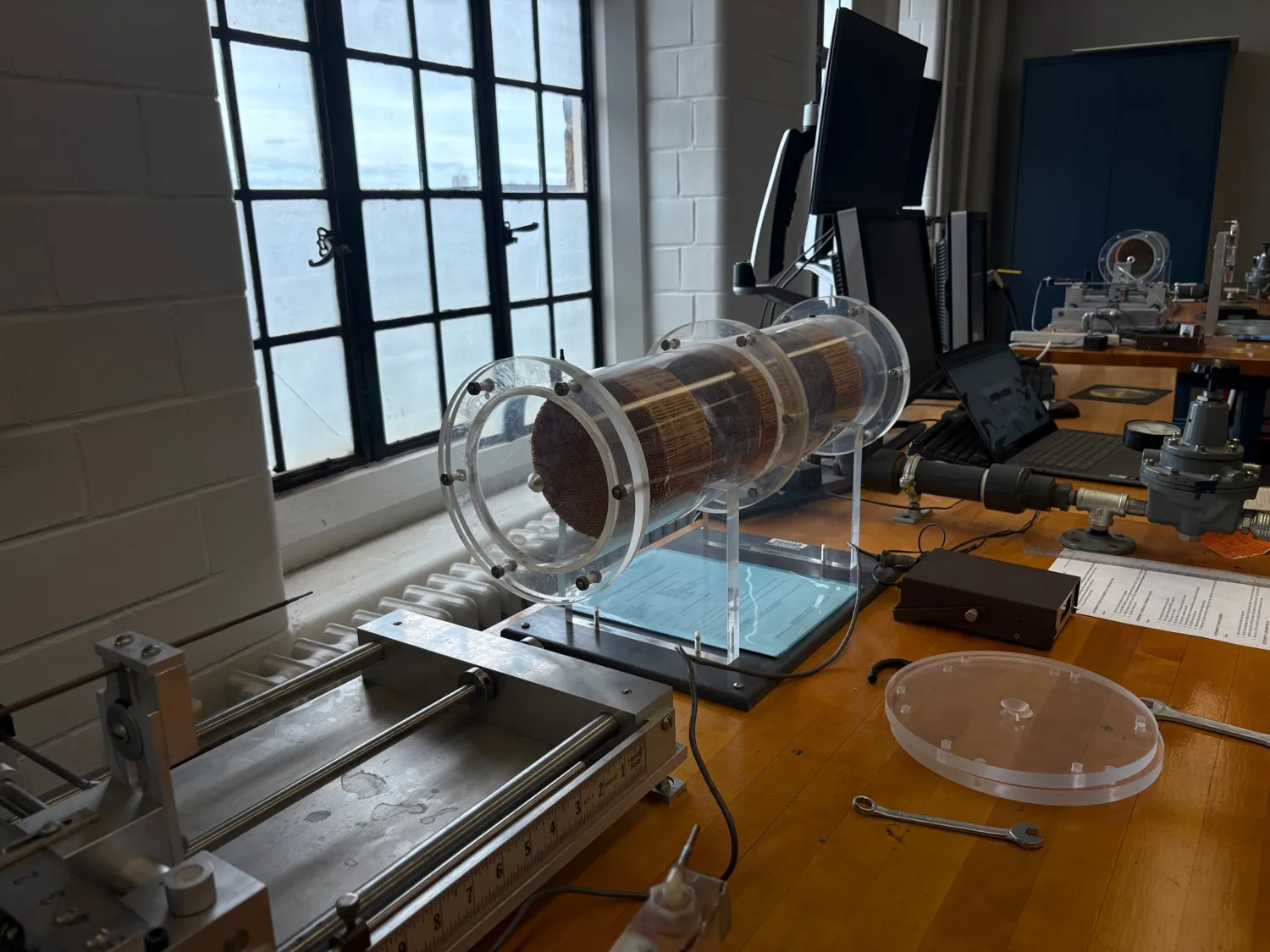
- Air jet rig with acrylic plenum and honeycomb
- Pressure transducer calibrated against a manometer
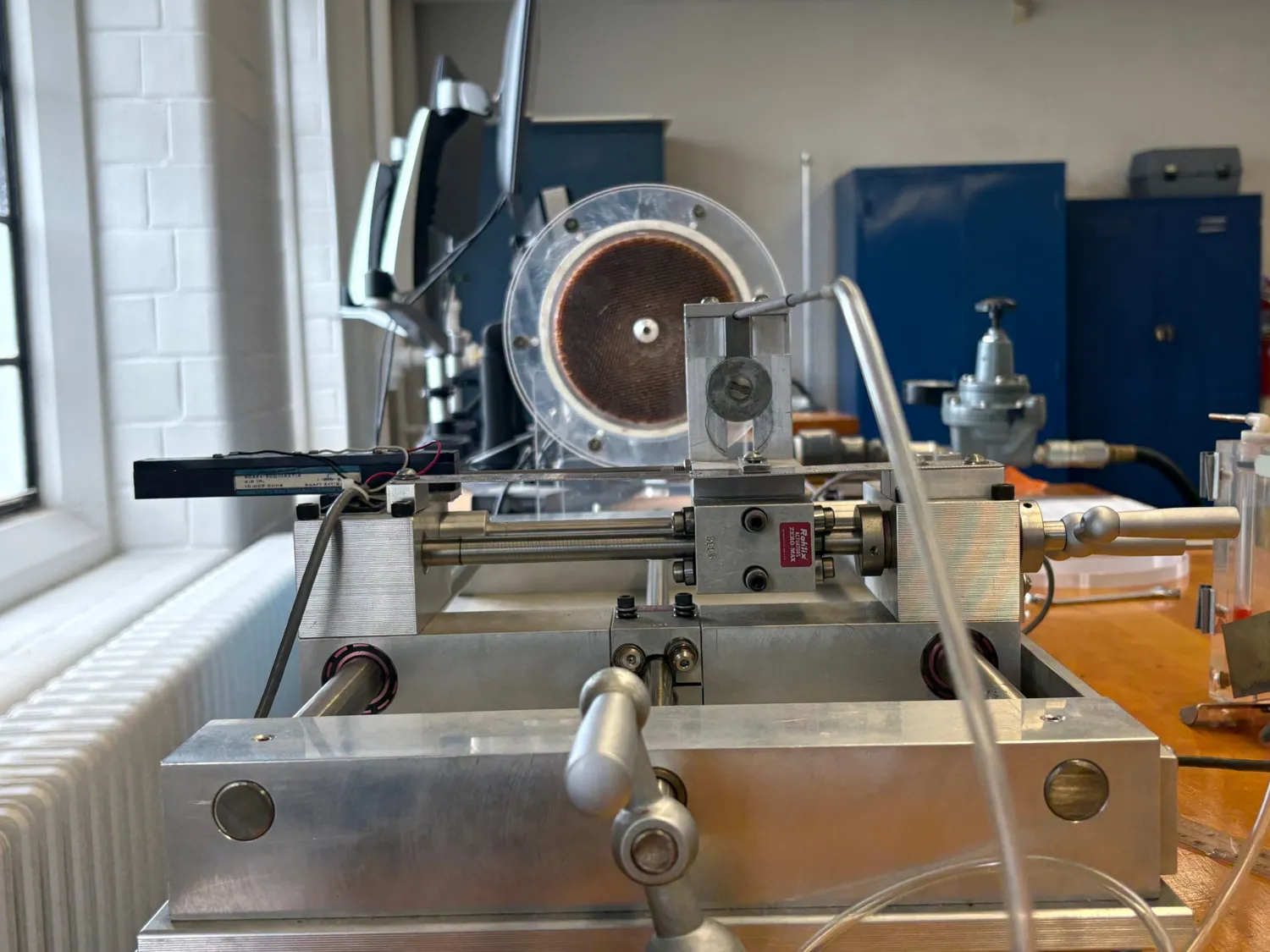
- Two-axis traverse with LVDT position sensing
- Python and MATLAB data reduction
Skills
- Experiment design
- Instrument calibration
- Uncertainty analysis
- Dimensional analysis
- Jet similarity theory
- Technical writing in IEEE format
Outcome
At the same distance the three jets run at nearly the same speed. The small orifice leaves faster but does not stay faster, because exit momentum is about the same across sizes.
Why it matters
An orifice sets the exit speed and how far a stream stays useful. Matching jets at about the same Reynolds number shows that exit speed alone does not decide the reach.
Scope
Centerline decay and scaled profiles are reported. Jet spread rate is not.
Available for DFMA, industrial design, and mechanical implementation.
Inquirejr@smartflowinventory.com